Centimetre-level positioning. Sub-millisecond timing.
A dual-band RTK GPS device on the car and a base station at the venue time each crossing of a virtual line to within 1 ms. There are no cables to run and no pavement to cut. The same device is also a data logger for the driver.
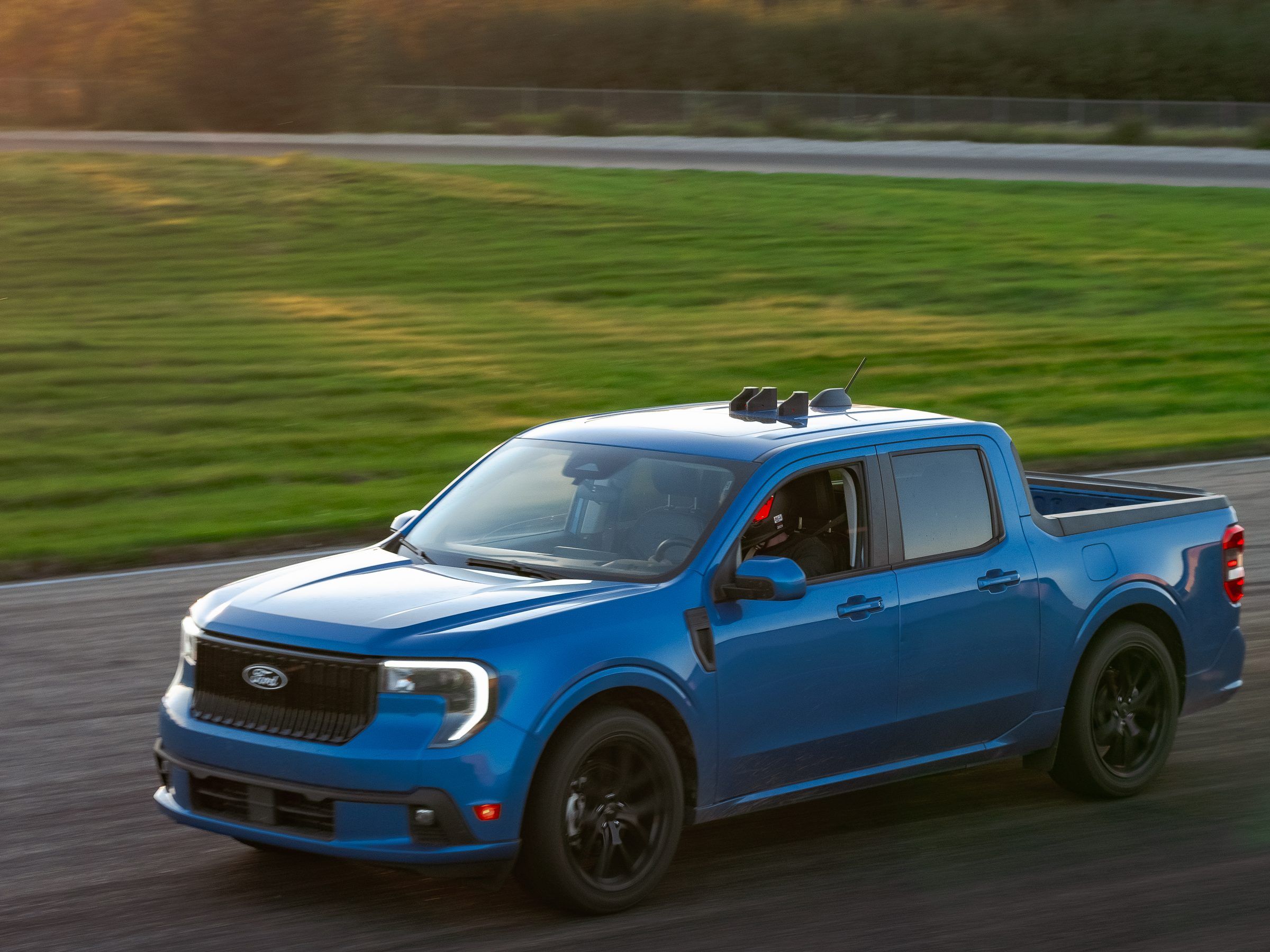
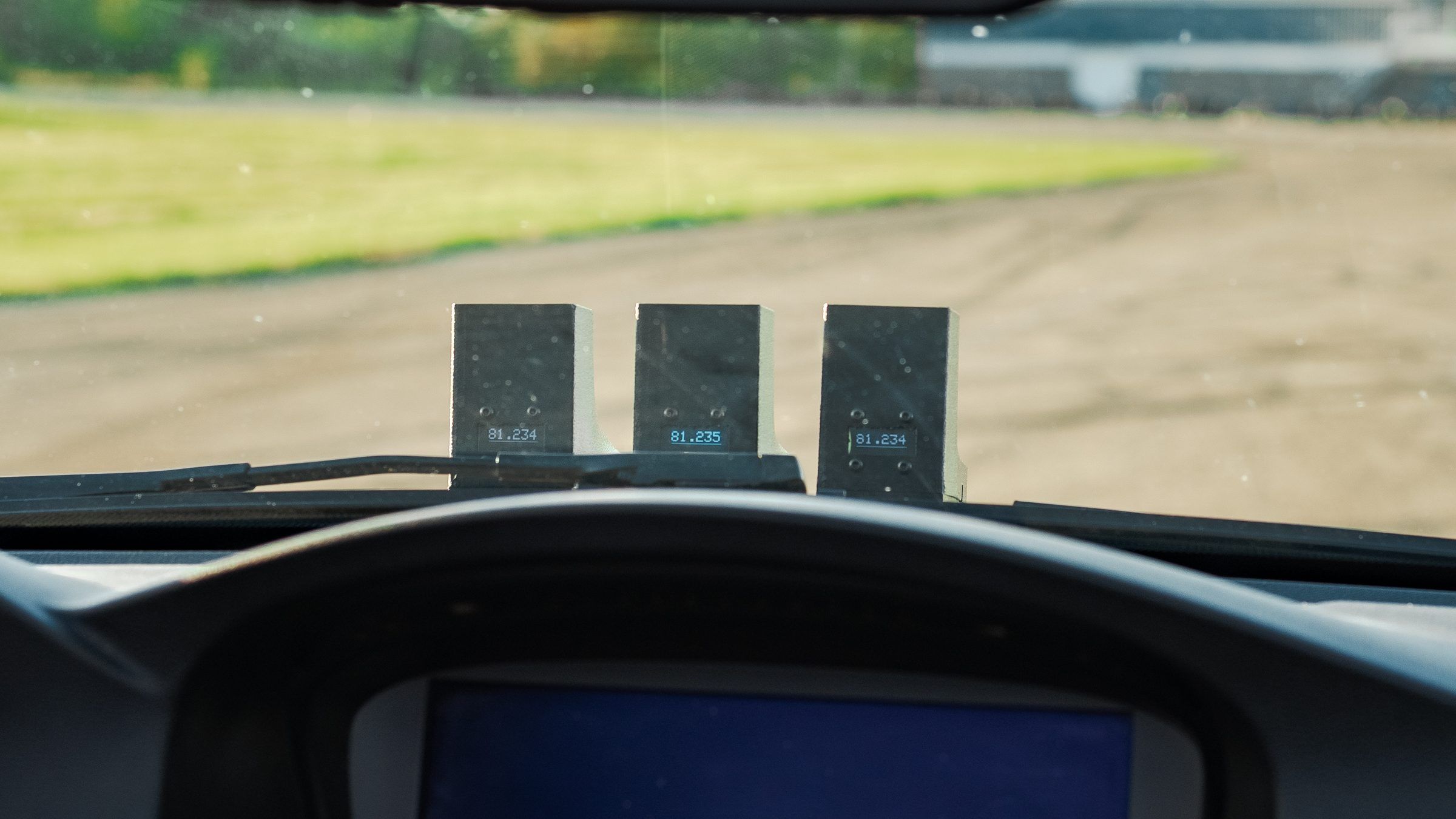
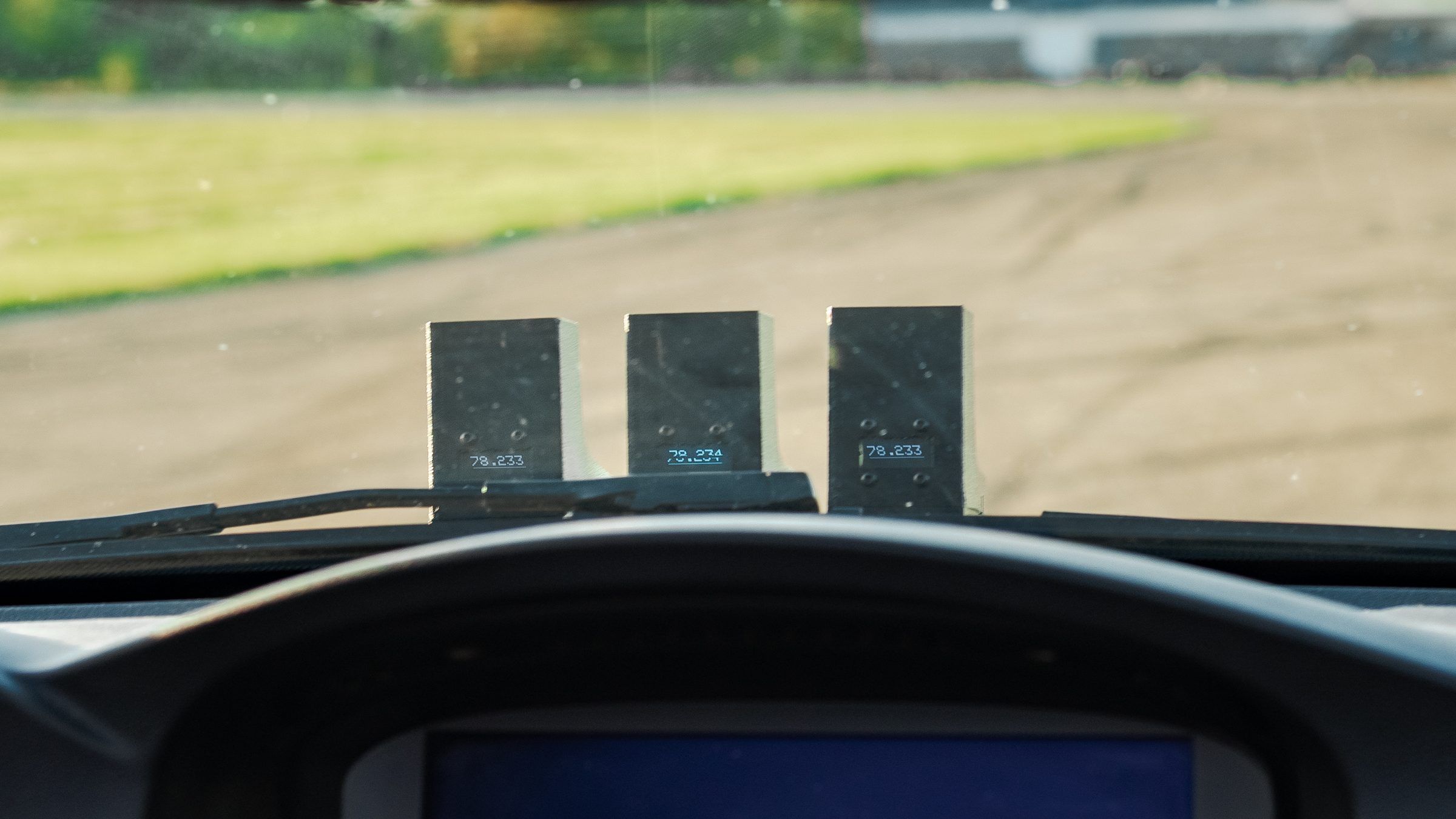
Consistent spread across independent devices on the same vehicle.
Calibrated multi-marker passes against other systems before delivery.
Every crossing is stored with telemetry to audit the accuracy of that individual record.
In our testing, discrepancy range (1.3 to 56.3 ms) observed on commercial optical lasers while Sidereal matched within 1 ms.
Why personal loggers and phone apps can't give millisecond timing.
±1 to 2 metre drift
Phone apps use the phone's built-in GPS, which updates once a second and has limited accuracy. Personal data loggers update 10 to 25 times a second, but without RTK corrections their position still drifts by a metre or two. Most GPS loggers are about 100 times less accurate than Sidereal (about 1 m against 1 cm). At 100 km/h a car covers one metre every 36 ms, so a two-metre drift is 72 ms of timing uncertainty, enough to change podium positions in a tight championship.
±1 centimetre precision
A stationary base station calculates atmospheric and orbital errors in real time and broadcasts corrections across the venue. Each device then works out the moment it crosses the virtual line, with sub-millisecond precision, and records the whole run as data for the driver.
How we tested our timing accuracy.
How a crossing is timed, how it compares with optical lasers, what the audit record holds and where to mount the device.
Want to compare it against your current system?
We welcome running Sidereal side-by-side with your existing photocell beam or transponder setup at an event so you can see the comparison on your own timing sheets.